Wardley Maps 1 — True user needs
I’ve been exploring Wardley Maps for the past few months, and I think they’re one of the most useful strategic tools I’ve encountered. This is the first in a short series of posts.
What is a Wardley Map?
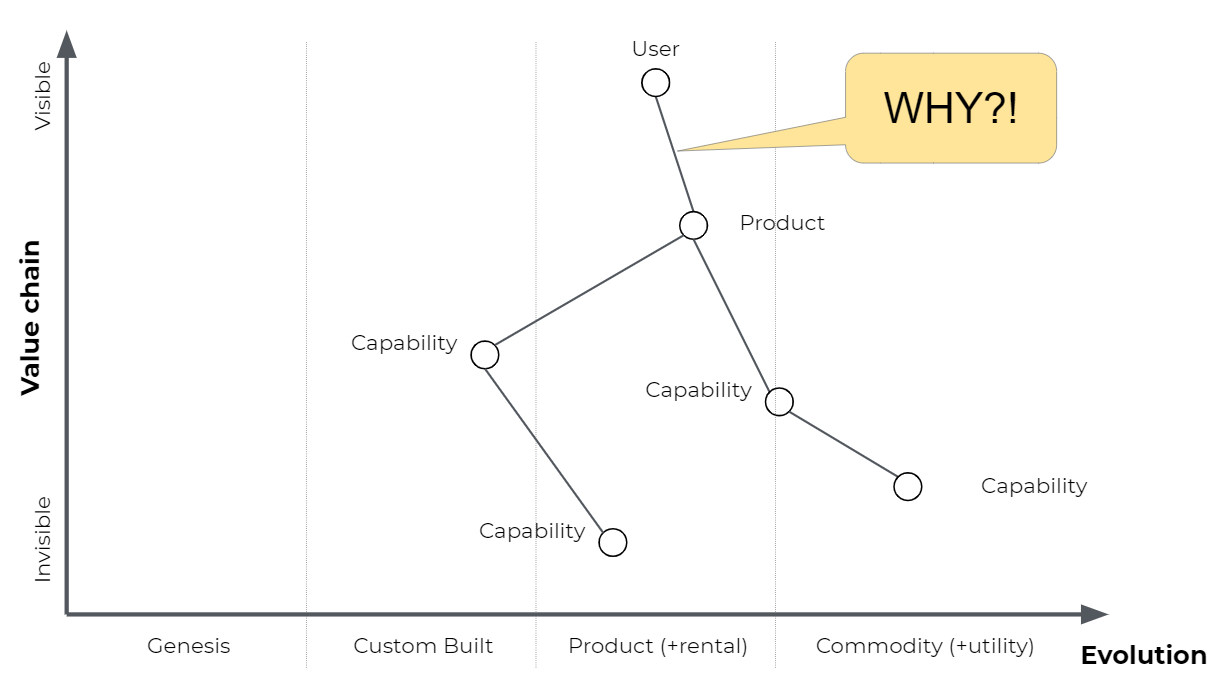
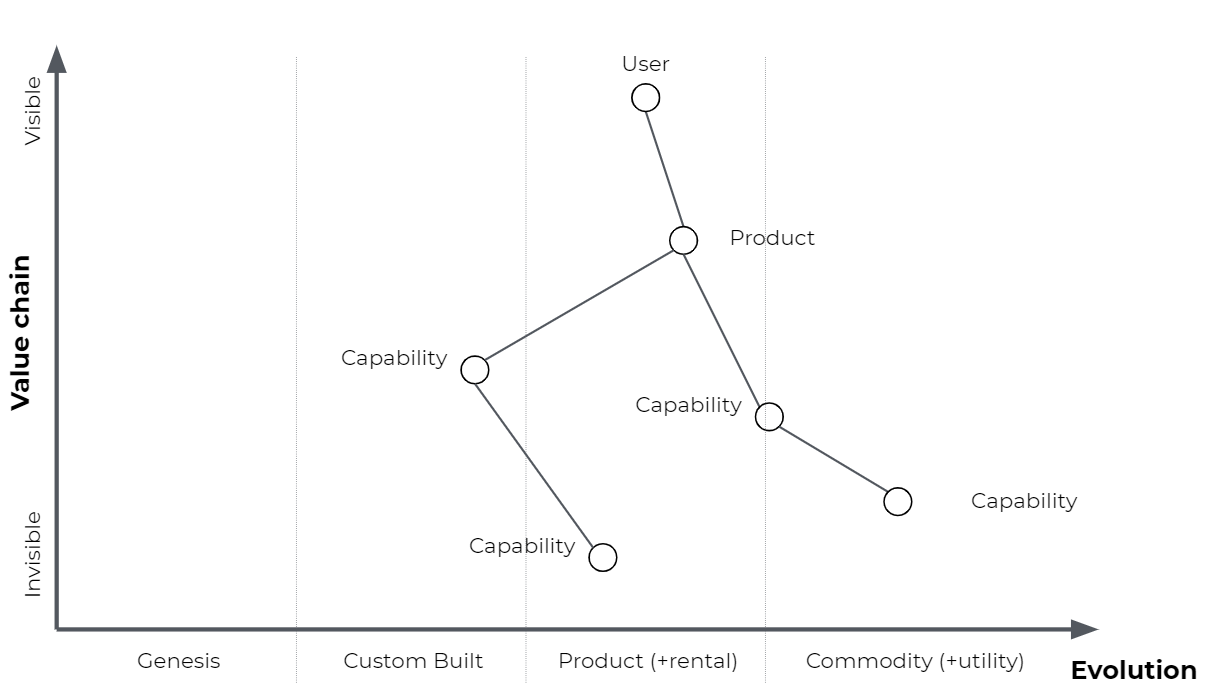
A Wardley Map is a visual tool for strategic thinking. It maps the components of a value chain — the things that need to exist for a user need to be met — against an axis of evolution, from novel to commodity.
The result is a picture of your strategic landscape: what you’re relying on, how mature those dependencies are, and where change is coming.
The most common mistake
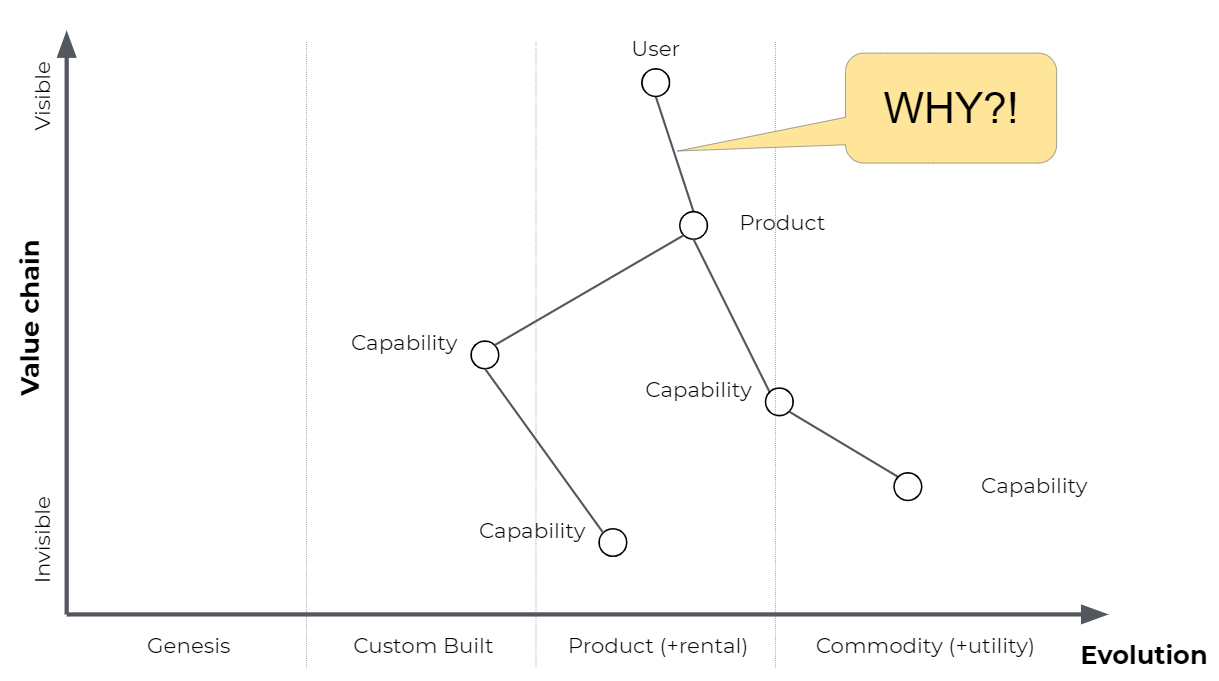
Most maps fail before they start. The failure is to begin the map with the product or service itself — to assume that the user needs your thing, rather than exploring why.
Let’s start with a simple example. A tea shop.
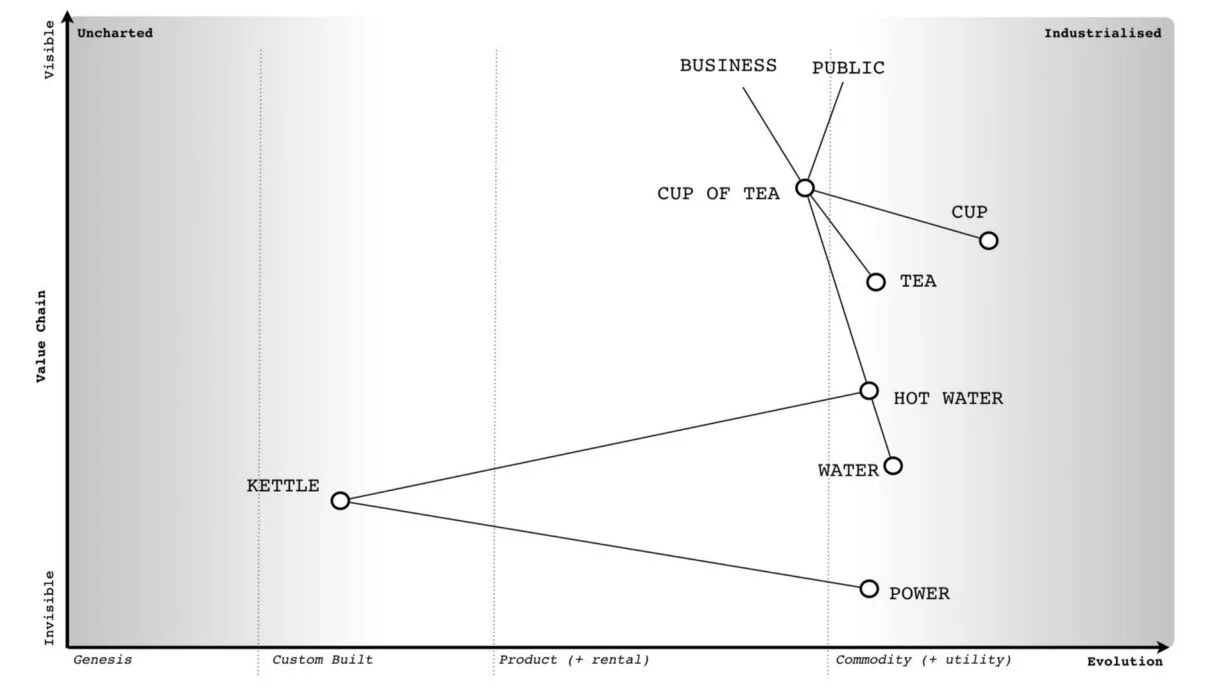
What does the user actually need? If we start our map with the tea shop itself, we might think about how to improve the tea shop. But if we ask why people go to a tea shop, we get to something much more interesting.
Starbucks understood this. Their ‘third place’ concept — a place between home and work — is a timeless, solution-agnostic need.
Now consider Kodak. A map starting with “the user needs film cameras” looks very different from a map starting with “the user needs to capture memories of their children.” The first map looks stable until digital photography arrives. The second map anticipates it.
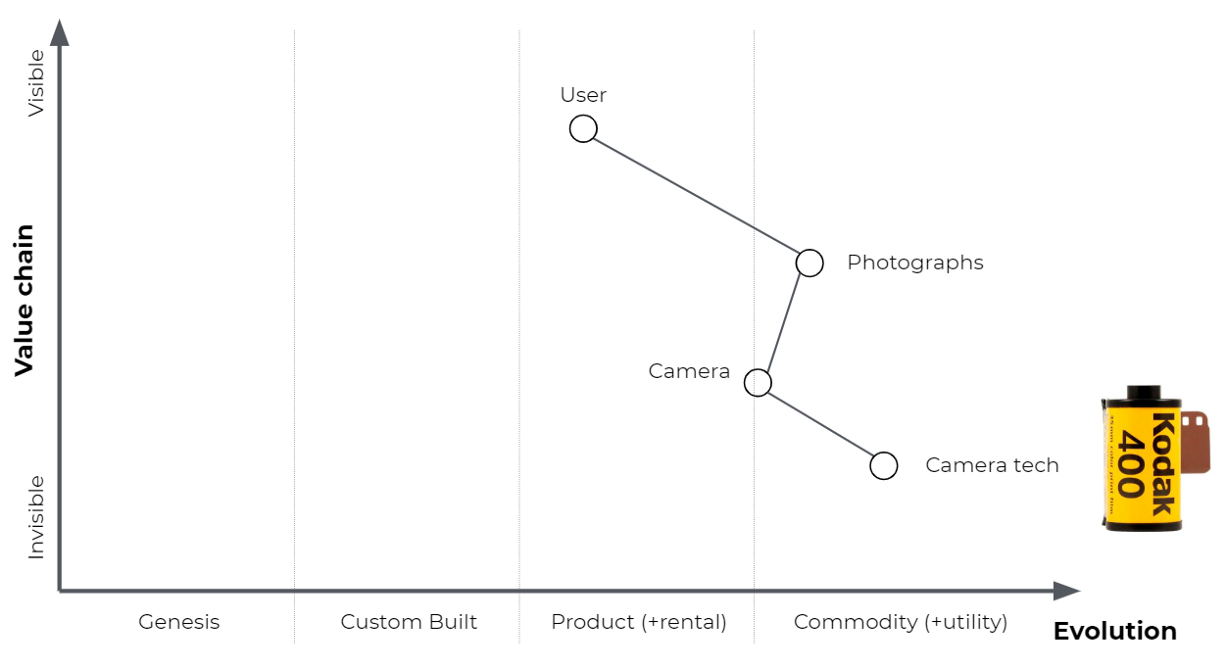
If we start our map with an assumption that the user simply needs our product or service, we’re already on very dodgy ground.
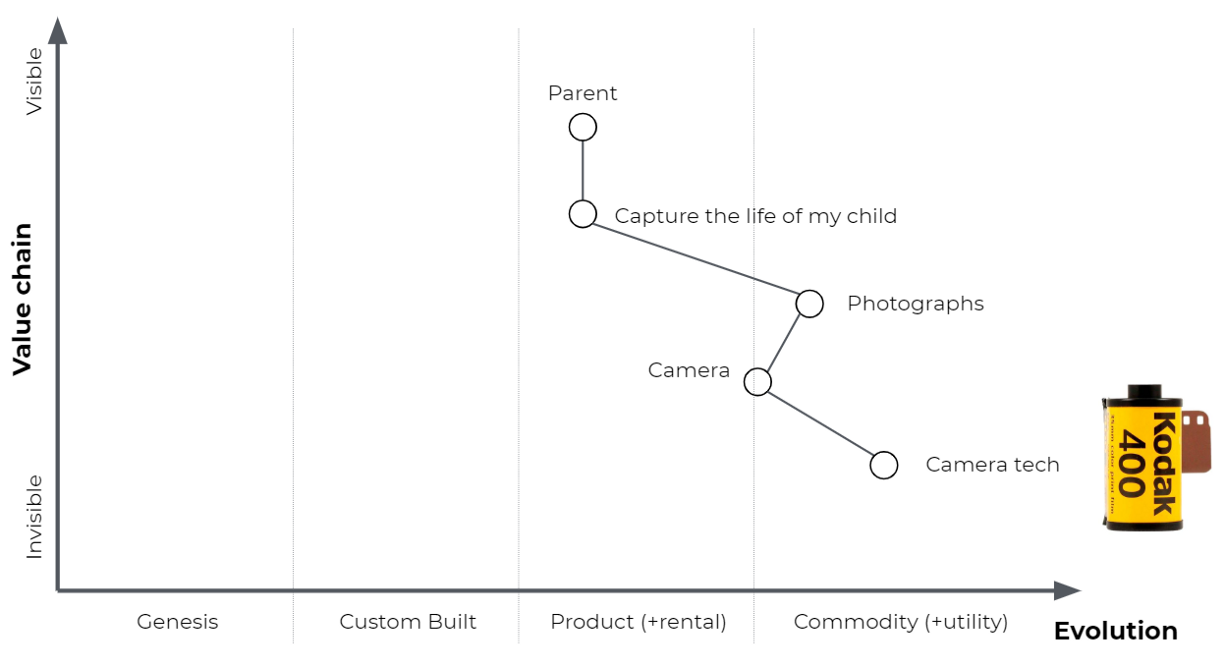
Timeless, solution-agnostic needs
Good maps anchor to a timeless, solution-agnostic need. Not “users need a taxi” but “users need to get from A to B.” Not “users need a hotel” but “users need somewhere to stay when they travel.”
This framing does two things. It opens up the map to a wider range of components and dependencies. And it makes the map durable — the underlying need doesn’t change even as the solutions do.
It also helps identify unexpected competitors. If your map starts with “users need a place to stay,” Airbnb is visible on the horizon in a way it wouldn’t be if you started with “users need a hotel room.”
Starting point
Before you map anything, ask: what is the timeless, solution-agnostic need that anchors this map? The answer is rarely what you first think. It takes time and honest questioning to get to something genuinely durable.
But it’s worth the effort. Everything else in the map depends on getting this right.
In the next post, I’ll look at what Wardley Maps reveal about unique selling points.