Wardley Maps 2 — Unique selling points
In the first post in this series, I introduced Wardley Maps and argued that every map needs to start with a genuine, timeless user need rather than an assumed product.
In this post, I want to explore what Wardley Maps reveal about unique selling points — and why most USPs are more fragile than we think.
Where do USPs come from?
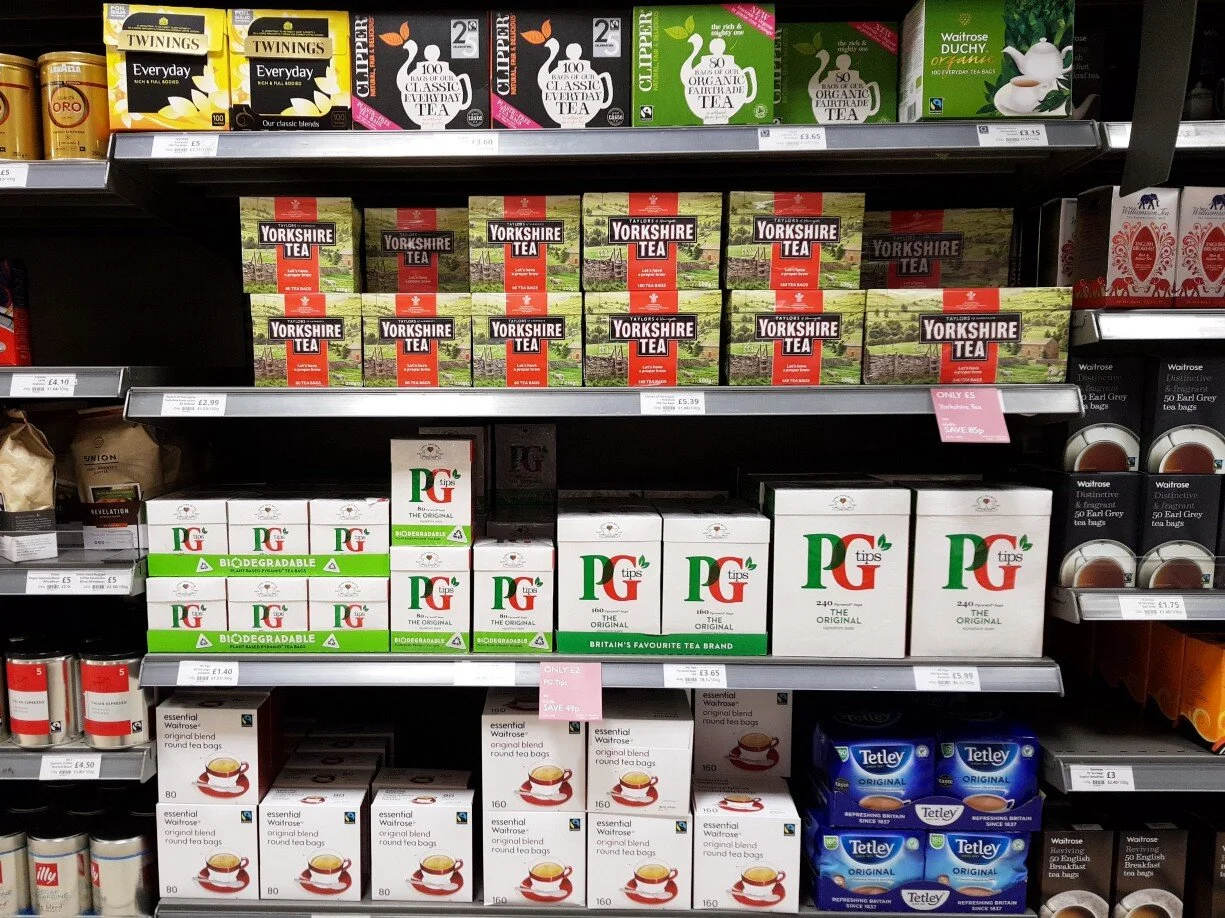
Stand in a supermarket aisle. What makes one product stand out from another? Wardley Maps help answer this. USPs typically emerge in the “Genesis” or “Custom built” phase of the map — where products possess genuine distinctiveness, where the thing itself is new and different.
As products mature toward commodity, the nature of differentiation has to change. The product itself is no longer special. Something else has to be.
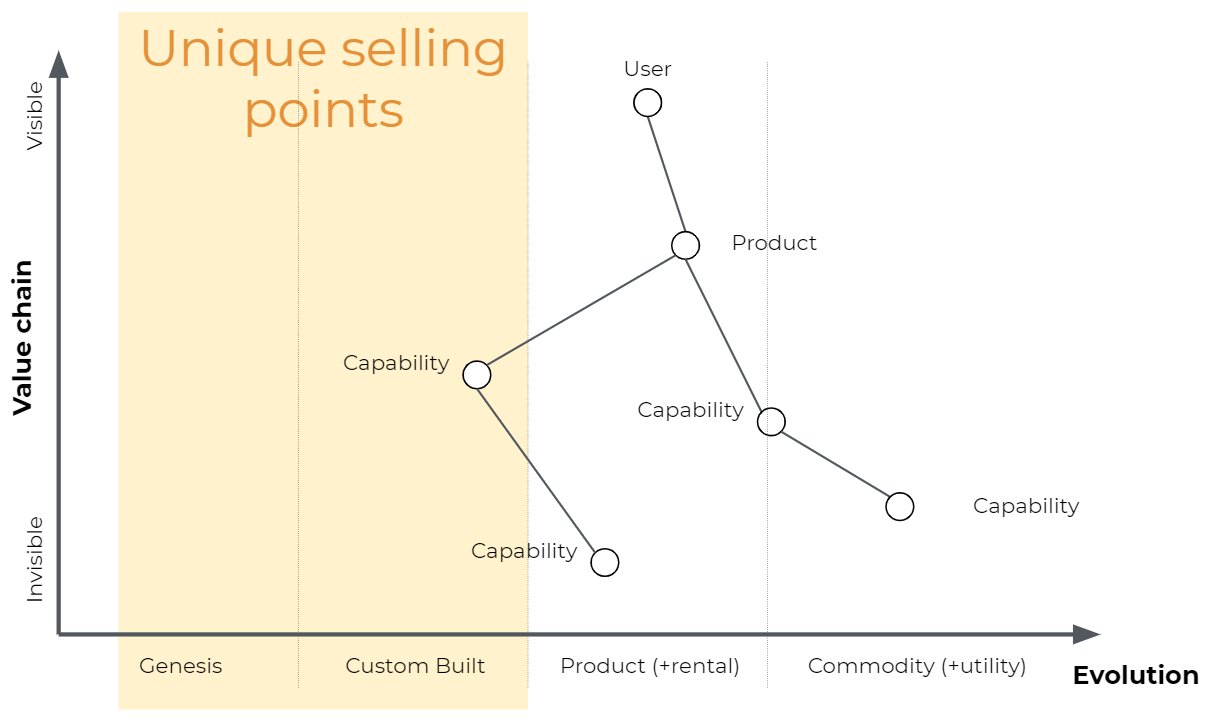
Tea bags as a Wardley Map
Consider four tea companies, mapped across the evolution spectrum:
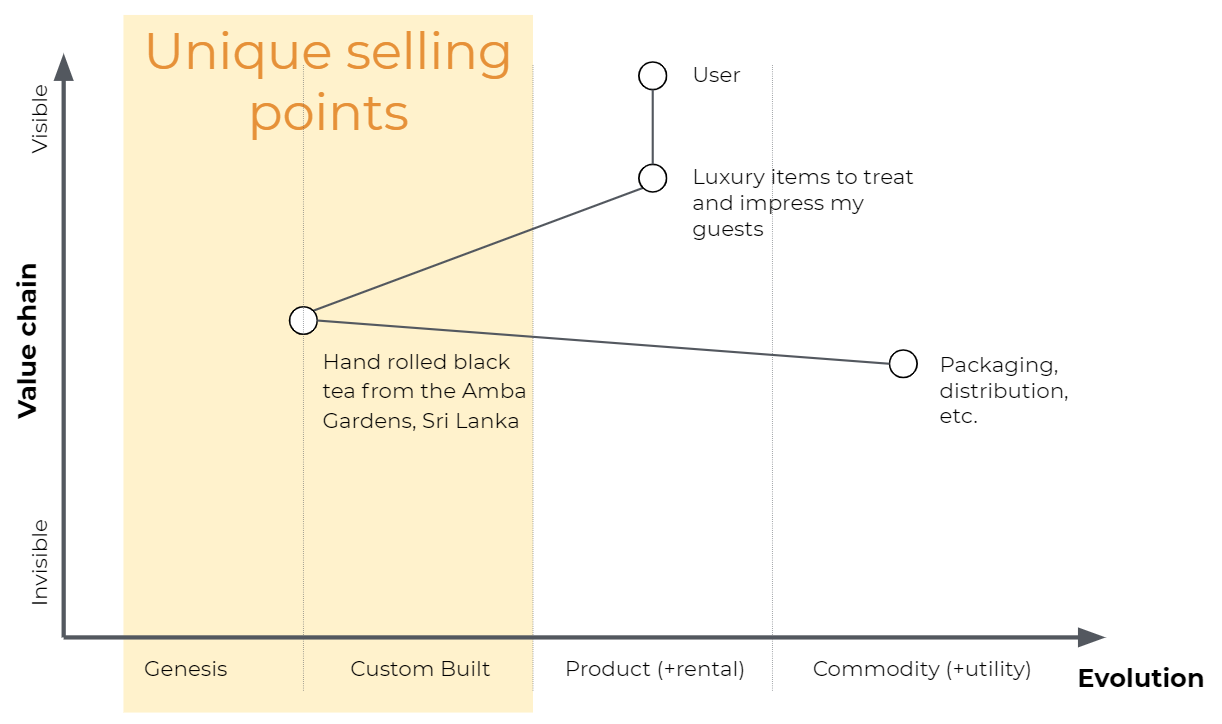
Rare Tea Company represents the genesis stage. The product itself is the USP: “hand rolled black tea from the Amba Gardens, Sri Lanka.” The provenance, the rarity, the specificity — these are genuinely distinctive.
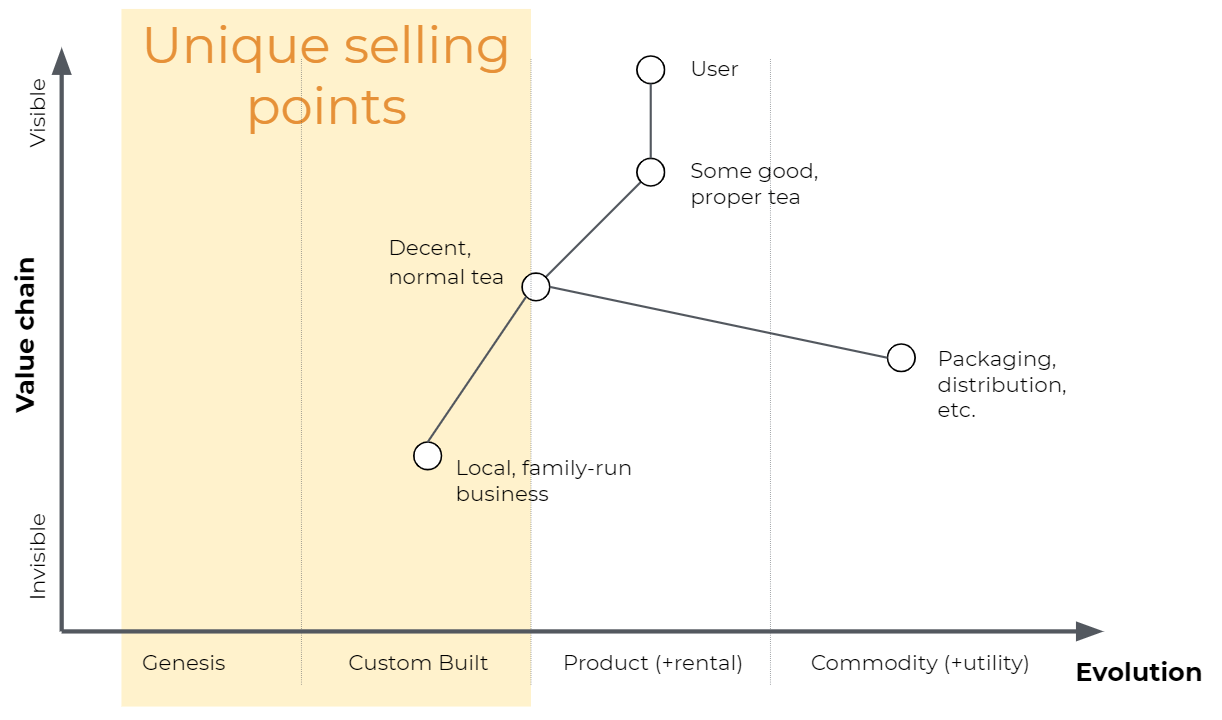
Yorkshire Tea operates in the custom phase. The product is good, and provenance still matters, but the brand narrative does significant work. “Proper tea” is positioning as much as product.
PG Tips sits in the product phase. The unique selling points are almost entirely about brand — the monkey, the pyramid bag, the heritage. The tea itself is interchangeable with several competitors.
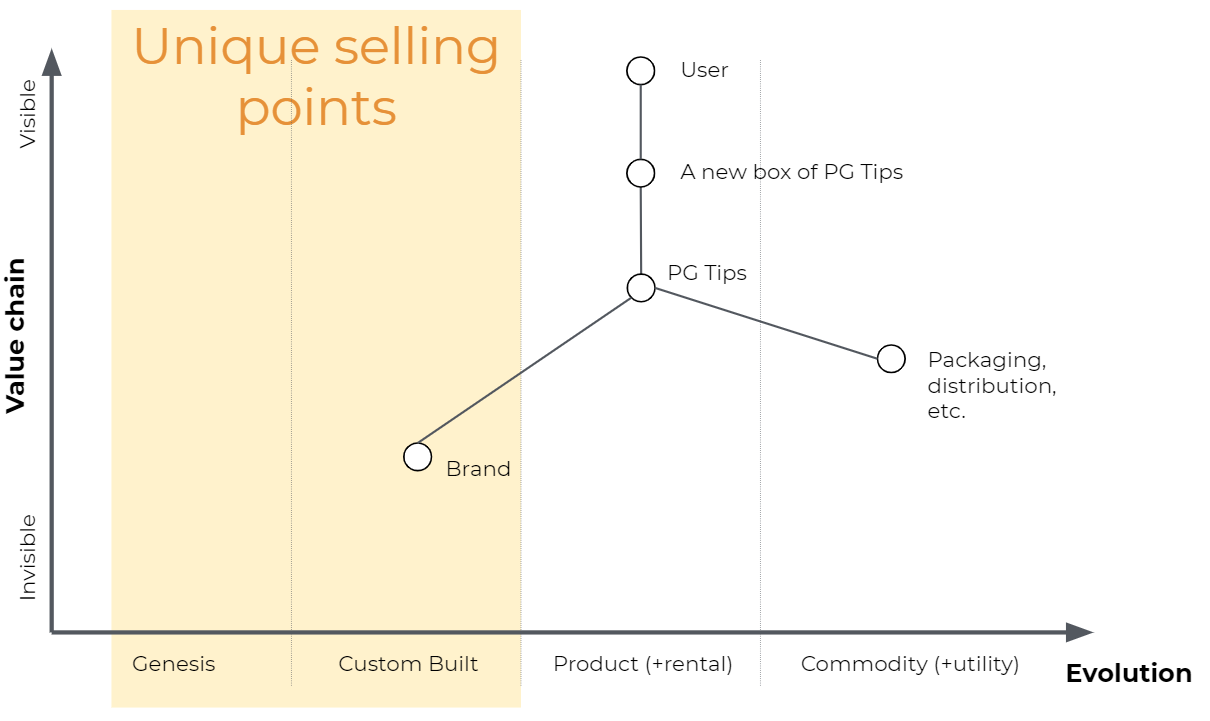
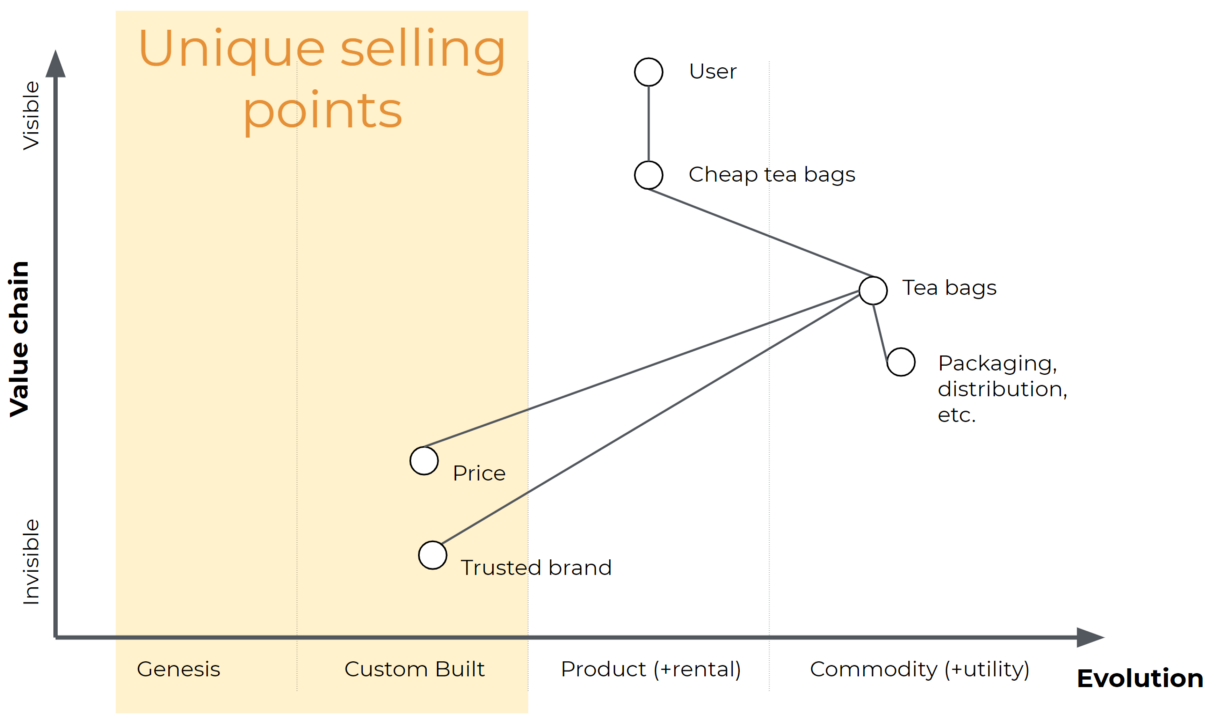
Sainsbury’s Basics occupies the commodity space. Price is the only consideration. The product is standardised. Brand is minimal.
The implication
As technologies and products mature toward commoditisation, companies must shift their positioning from the product itself toward brand, trust, and reputation.
Here’s what’s important: brand and reputation don’t evolve along the map the way technology does. A commodity product can still carry a premium brand. But that brand has to be built over time, before commoditisation arrives — not after.
The strategic question for any product is: where am I on this map, and what kind of USP is available to me at this stage? If you’re in genesis, the product is the USP. If you’re approaching commodity, you’d better be building something that transcends the product.