5 lessons from 11 years taking The Key from 0 to 12,000 schools
I’ve just moved on from The Key after eleven years. We grew from a government-funded pilot to a subscription service supporting around 12,000 schools — roughly 50% of schools in England.
Before I go too far from it, I want to capture five things I learned.
1. It’s a marathon
There was no single breakthrough moment. No pivot that unlocked everything. No viral launch that changed the trajectory. Just consistent effort. Sales outperformed churn. For a decade. Thousands of articles written. Hundreds of marketing initiatives. Incremental improvements to the product, year after year.
I don’t think this is depressing. I think it’s clarifying. The question is whether you can maintain quality and effort over a long time horizon. If you can, compounding does the rest.
2. The power of thinking big
From the beginning, The Key was designed to serve every school in England. Not a region. Not a type of school. Every school.
This mattered strategically. It prevented us from building something geographically limited or niche. It forced every product and operational decision toward scalability and self-service rather than expensive, localised approaches.
Thinking at national scale, even when you’re tiny, shapes the decisions you make in ways that pay off later.
3. Time your leaps, but take them
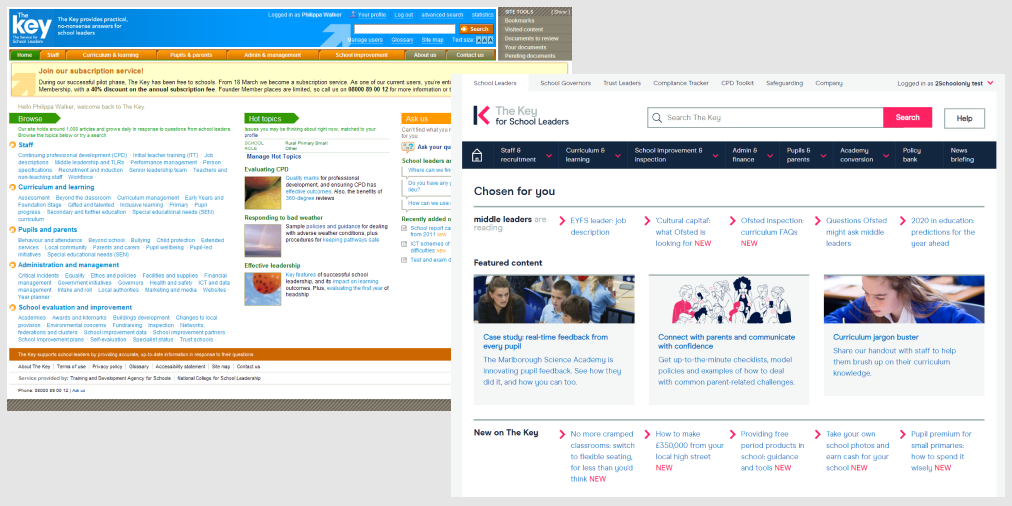
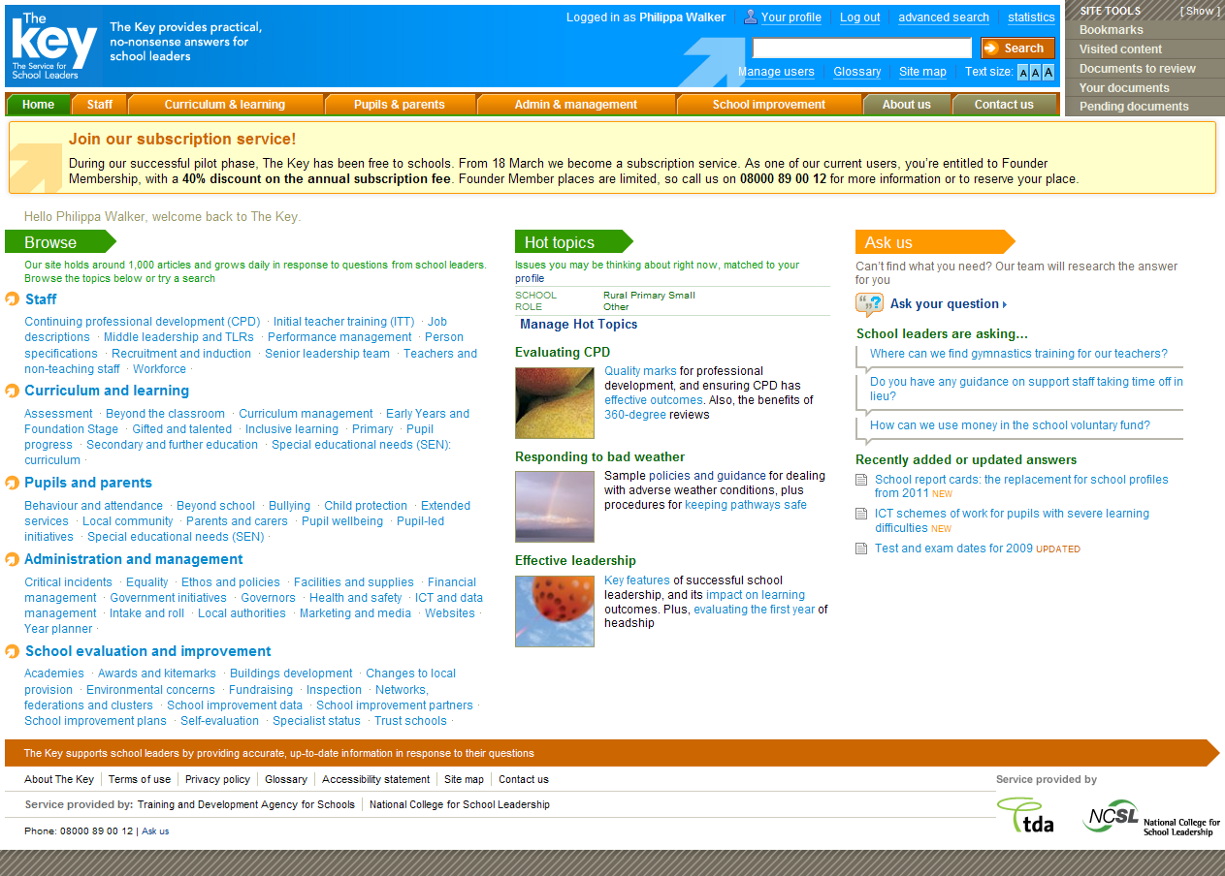
The Key’s website when we started, in early 2009:
The Key for School Leaders today:
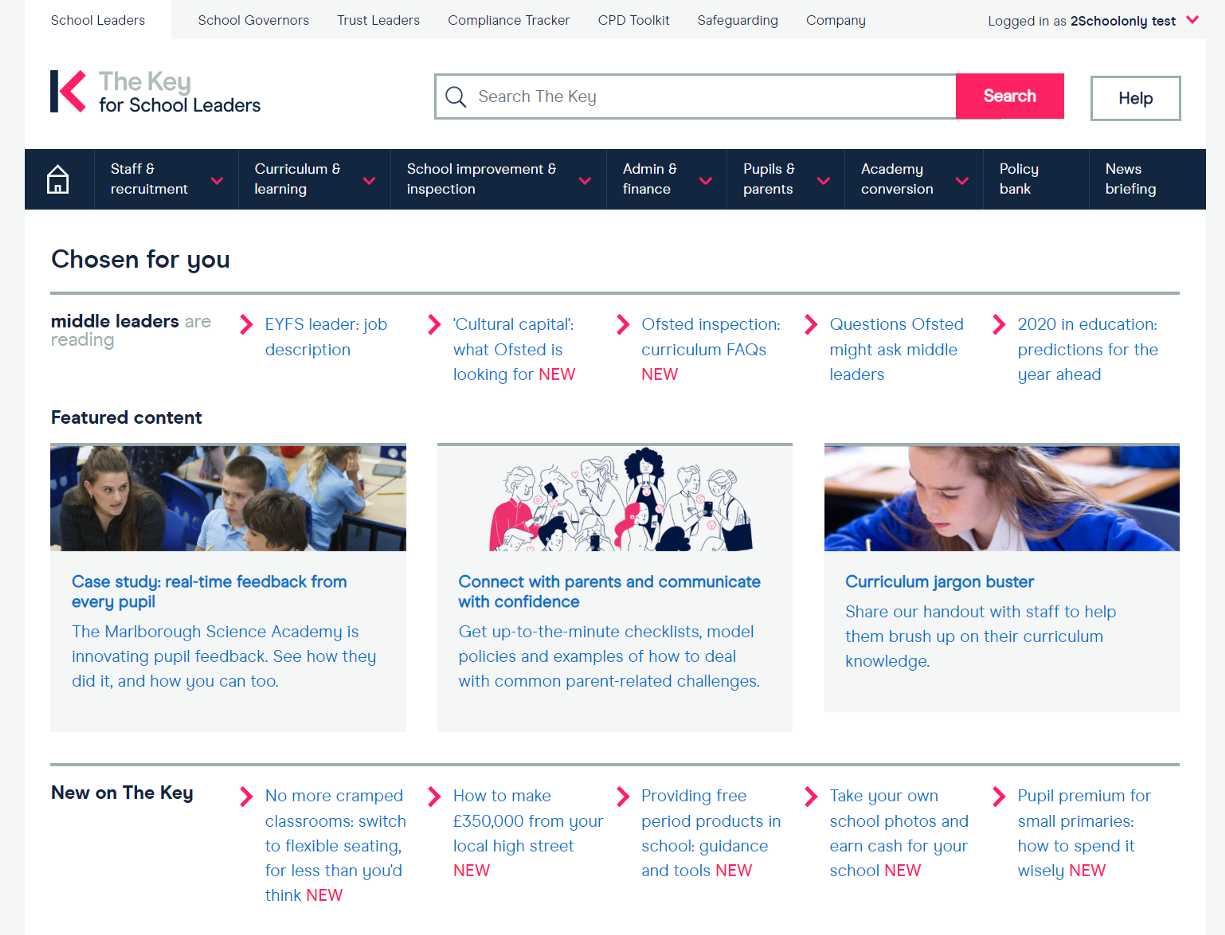
Over eleven years, the technology platform evolved significantly — from Plone CMS on physical servers to Django, Vue.js, and Google Cloud Platform. Each transition was costly and disruptive. But each was necessary. The lesson isn’t to never replatform — it’s to time it well, to have a clear reason for the change, and to commit fully when you decide to make it.
4. Keep it simple
Einstein’s principle: “Everything should be made as simple as possible, but no simpler.”
The second half of that sentence matters. Oversimplifying complex problems creates false solutions. Genuine simplicity requires acknowledging the underlying complexity and working hard to resolve it, not paper over it.
5. Look after each other
Business metrics matter. Member feedback matters. But I’m proudest of the culture we built at The Key — where people felt genuinely supported, where difficult personal moments were met with care, where the organisation’s success didn’t come at the cost of the people delivering it.
This isn’t separate from performance. Teams that feel looked after perform better, stay longer, and bring more of themselves to the work. It’s not a trade-off. It’s the same thing.